
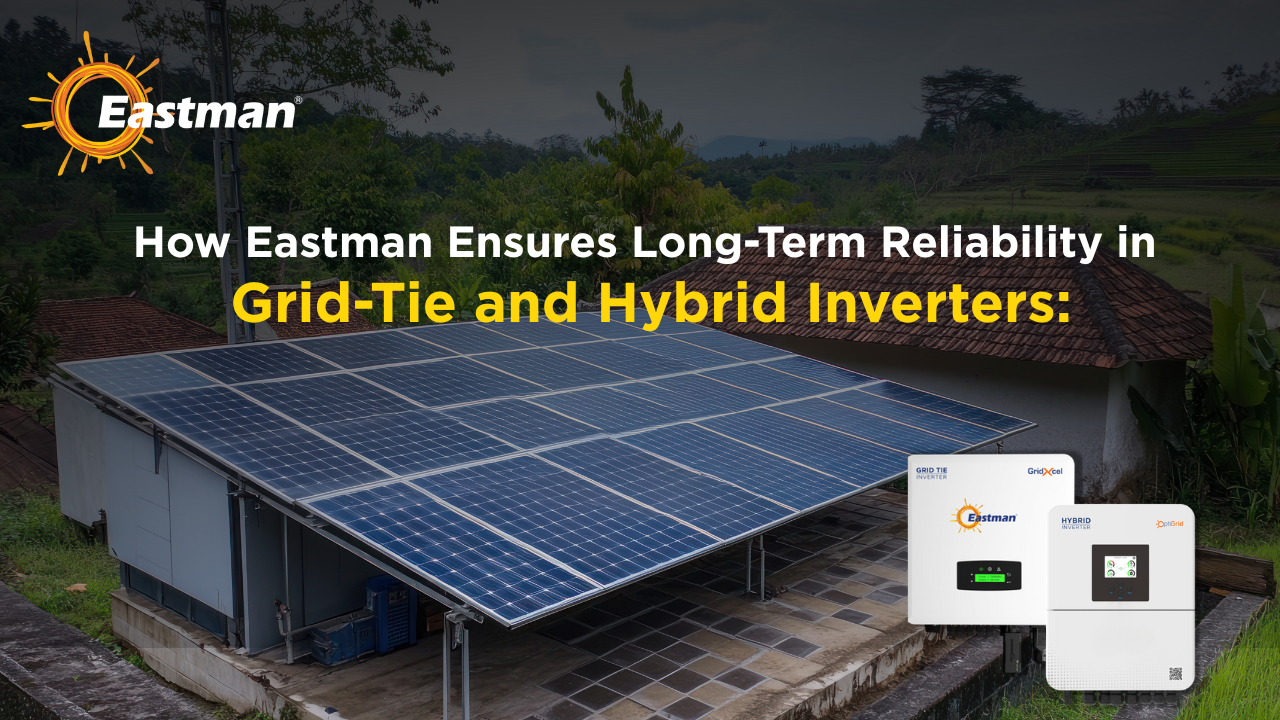

As the world steadily transitions toward renewable energy, solar power has emerged as one of the most dependable and sustainable solutions for homes, businesses, and industries. Investing in solar energy is a significant decision for any homeowner, particularly those planning for a secure and comfortable retirement. As you look to future-proof your lifestyle and manage rising energy costs, the reliability of your solar power system becomes paramount. However, while solar panels often get the spotlight, the true backbone of any solar power system is the inverter. It is the inverter that determines how efficiently solar energy is converted, how safely it is delivered, and how reliably the entire system performs over the long run.
For homeowners and businesses alike, achieving peace of mind and long-term financial security starts with choosing an inverter engineered for durability and reliability. In this evolving energy landscape, long-term reliability is not a luxury; it is a necessity. This is where Eastman Auto & Power Ltd. has carved a strong position. Backed by decades of expertise in power electronics, energy storage, and backup solutions, Eastman has developed Grid-Tie and Hybrid Solar Inverters engineered for durability, efficiency, and consistent performance over years of operation.
This blog takes a deep dive into how Eastman ensures long-term reliability in Grid-Tie & Hybrid Inverters and why the brand is increasingly recognized as one of the top solar inverter and battery brands in India.
Understanding the Importance of Reliability in Solar Inverters
Before examining reliability factors, it is essential to clarify the roles of different inverter types. The choice between a grid-tie and a hybrid inverter depends mainly on your specific energy goals and infrastructure. When investing in solar energy, customers are not just purchasing equipment; they are investing in a system expected to operate smoothly for 15–25 years. In such a scenario, inverter reliability directly impacts: Energy output consistency, System safety, Maintenance costs, Overall return on investment (ROI) & User confidence in solar technology.
An unreliable inverter can cause frequent breakdowns, energy losses, unexpected downtime, and costly repairs. Eastman addresses these challenges through a holistic reliability-first approach, ensuring its inverters deliver stable performance year after year. Here are some Key facts about Grid-Tie & Hybrid Inverters:
1. Grid-Tie Inverters- A grid-tie inverter connects your solar panels directly to the utility grid. Its primary function is to convert Direct Current (DC) from solar panels into Alternating Current (AC) compatible with your home appliances and the grid.
- Key Function: It synchronizes with the grid's voltage and frequency.
- Benefit: Excess energy generated can often be fed back into the grid, potentially earning your credits through net metering.
- Limitation: For safety reasons, standard grid-tie inverters automatically shut down during a power outage to prevent back-feeding electricity into lines that utility workers might be repairing.
2. Hybrid Inverters- Hybrid inverters offer a more comprehensive solution, combining the capabilities of a grid-tie inverter with a battery inverter. This system manages power from solar panels, battery storage, and the grid simultaneously.
- Key Function: It can store excess solar energy in batteries for use during the evening or power outages.
- Benefit: Provides energy security and independence, ensuring critical appliances remain operational when the grid goes down.
- Relevance: For those prioritizing security and uninterrupted power, a hybrid system acts as a safeguard against grid instability.
Eastman's Reliability-First Engineering
Eastman’s inverter development is guided by one core principle: Design products for real-world conditions, not just ideal environments.
Every Grid-Tie and Hybrid Inverter undergoes meticulous engineering to ensure it performs consistently under varying grid conditions, fluctuating solar generation, and challenging environmental factors.
1. Superior Build Quality Designed for Long Life
Structural Strength: Eastman uses premium-quality materials to ensure mechanical durability and electrical safety. The inverter housings are constructed from corrosion-resistant metals to protect internal components from environmental damage. This results in:
- Enhanced resistance to rust and corrosion
- Improved structural stability over time
- Reduced wear and tear from outdoor exposure
Internal Component: The thoughtful internal architecture significantly contributes to the inverter’s long operational life. Inside the inverter, components are carefully arranged to:
- Minimize heat concentration
- Reduce electrical interference
- Lower stress on sensitive electronic parts
Designed for Indian & Global Climatic Conditions: Eastman inverters are designed and suitable for not just India, but also for global markets with similar operating conditions. Eastman inverters are engineered to withstand:
- High ambient temperatures are typical in Indian summers
- Humidity and dust in coastal and industrial regions
- Voltage fluctuations in semi-urban and rural grids
2. Advanced Thermal Management for Sustained Performance
Heat management is one of the most critical factors influencing inverter reliability. Excess heat accelerates component ageing and reduces efficiency.
Efficient Heat Dissipation Mechanisms: The elements that ensure heat is dissipated quickly and evenly, preventing hotspots that can damage internal components. Eastman inverters incorporate:
- High-efficiency heat sinks
- Intelligent airflow channels
- Thermally optimized PCB designs
Smart Temperature Monitoring: Built-in thermal sensors continuously monitor internal temperatures. If temperatures rise beyond safe thresholds, the system:
Automatically adjusts output → Protects critical components → Prevents permanent damage. This intelligent response ensures uninterrupted performance while safeguarding the inverter’s lifespan.
3. Multi-Layer Electrical Protection for Maximum Safety
Reliability also means safety for users and the grid. Eastman integrates multiple layers of electrical protection into its Grid-Tie and Hybrid Inverters.
Anti-Islanding Protection: This feature ensures the inverter disconnects automatically during grid outages, preventing back feeding and ensuring technician safety during maintenance.
Overvoltage & Undervoltage Protection: Eastman inverters continuously monitor grid voltage levels and protect the system. This prevents damage to connected appliances and internal inverter components against:
- Sudden voltage spikes
- Grid instability
- Prolonged low-voltage conditions
Short-Circuit & Overload Protection: In the event of abnormal load conditions or wiring faults, the inverter:
- Instantly isolates the fault
- Prevents overheating
- Maintains system integrity
Surge & Lightning Protection: Integrated surge protection devices on both AC and DC sides protect against transient surges caused by lightning or grid disturbances, a critical feature in solar installations.
4. Smart Monitoring & Digital Intelligence
Reliability today goes beyond hardware; it includes digital intelligence and data transparency.
Real-Time Performance Monitoring: This allows users and installers to monitor system performance anytime, anywhere. Eastman inverters support real-time tracking of:
- Power generation
- Energy consumption
- System health
- Fault alerts
Remote Diagnostics & Faster Troubleshooting: This proactive approach enhances user satisfaction. Through innovative connectivity options such as Wi-Fi, GPRS, and cloud platforms, Eastman enables:
- Early fault detection
- Faster service response
- Reduced system downtime
5. Hybrid Inverter Reliability Through Smart Energy Management
Eastman Hybrid Inverters are designed for users who want maximum flexibility without compromising reliability. Seamless Power Source Switching: Hybrid inverters intelligently switch between:
- Solar power
- Battery backup
- Utility grid
This seamless transition ensures an uninterrupted power supply, even during grid outages.
Optimized Energy Prioritization: The inverter prioritizes solar energy usage first, followed by battery and grid, ensuring:
- Reduced electricity bills
- Lower grid dependency
- Enhanced system efficiency
Battery Health Management: Eastman hybrid inverters include intelligent charging algorithms that:
- Prevent overcharging and deep discharge
- Maintain optimal battery cycles
- Extend battery life significantly
6. Compatibility with Advanced Battery Technologies
Energy storage is a crucial component of long-term reliability. Eastman inverters are compatible with multiple battery technologies, including:
- Lithium-ion batteries Advanced
- lead-acid batteries
- Eastman’s own energy storage solutions
This flexibility allows users to upgrade or customize their energy storage systems without compromising performance.
7. Long Warranty & Strong After-Sales Support
Eastman reinforces product reliability with strong warranty coverage and a well-established service ecosystem. Customers get the following advantages:
- Extended warranty support
- Nationwide service network
- Skilled technical teams
- Genuine spare parts availability
This robust after-sales infrastructure builds trust and confidence among customers, making Eastman a preferred choice in the solar inverter market.
Some Maintenance & Longevity Tips
While Eastman engineers' inverters are designed for durability, homeowners can further extend their investment lifespan through simple maintenance practices.
1. Ensure Proper Ventilation: Do not block the airflow around the inverter. Ensure there is at least 6 to 12 inches of clearance around the unit. Do not stack boxes or other household items against it, as this traps heat and forces the cooling system to work harder.
2. Regular Visual Inspections: Periodically inspect the inverter for any signs of physical damage or obstruction. Check the air intake vents for dust buildup. If dust is present, a gentle wipe with a dry cloth or using a soft brush can improve airflow significantly.
3. Monitor Error Logs: Modern Eastman inverters come with monitoring capabilities. Occasional checks of the system status via the display or associated app can help you catch minor warnings before they become significant issues. If you notice persistent error codes, contact our support team for personalized assistance.
Conclusion
Investing in a solar power system is a decision that impacts your home’s financial security and energy independence for years to come. The inverter is the keystone of this system. By prioritizing high-quality components, utilizing robust engineering topologies, and subjecting our products to punishing validation tests, Eastman ensures that your grid-tie or hybrid inverter will perform reliably decade after decade.
In a world where energy reliability defines productivity, comfort, and sustainability, anyone seeking long-term reliability in solar energy solutions can rely on Eastman Grid-Tie and Hybrid Inverters as a benchmark of trust and performance. By combining intelligent engineering, advanced safety, smart monitoring, and strong after-sales support, Eastman ensures that every solar system delivers dependable power.
Power with Reliability & Performance Today!
Ready to harness the power of solar for your business or home? The differences between Hybrid and Grid-Tie solar systems make it time to take decisive action toward energy independence.
Eastman remains a name that inspires confidence, drives innovation, and delivers value. We invite you to secure your future with a solution designed for peace of mind. With Eastman, you are not just buying a product; you are investing in a legacy of precision, safety, and enduring power.
- Contact Eastman for more information.
- Get to know more about Eastman’s Solar Solutions.
- Explore the range of Hybrid and Grid-Tie Solutions.
- Get to know your nearest Store Locator for convenience.
FAQ's
Q. I am not technical expert; how do I choose between Grid-Tie and Hybrid?
A. You do not need to be a technical expert. If your primary goal is to reduce electricity bills and you rarely experience power cuts, a Grid-Tie inverter is ideal. If you need backup power for security during outages or want to store energy for evening use, a Hybrid inverter is the correct choice. Our team can help assess your specific lifestyle needs.
Q. Are Eastman inverters suitable for commercial applications?
A. Yes, Eastman Grid-Tie and Hybrid Inverters are designed for residential, commercial, and industrial solar installations.
Q. Can Eastman hybrid inverters work during power cuts?
A. Absolutely. Hybrid inverters provide uninterrupted power by seamlessly switching to battery backup during grid outages.
Q. What is the difference between the warranty and the lifespan?
A. The warranty is our guarantee of protection against manufacturing defects for a set period. The lifespan is the length of time the unit is engineered to last. With proper care and installation, the operational lifespan often extends well beyond the warranty period.
Q. How long is the typical lifespan of an Eastman inverter?
A. Eastman inverters are designed to operate reliably for 10 to 15 years or more, depending on environmental conditions and maintenance. Our rigorous testing ensures that they can withstand the rigors of daily operation for this duration.
Share:


related Posts


Interested in buying our products?
Fill the enquiry form or call us on:
 78728 78728