
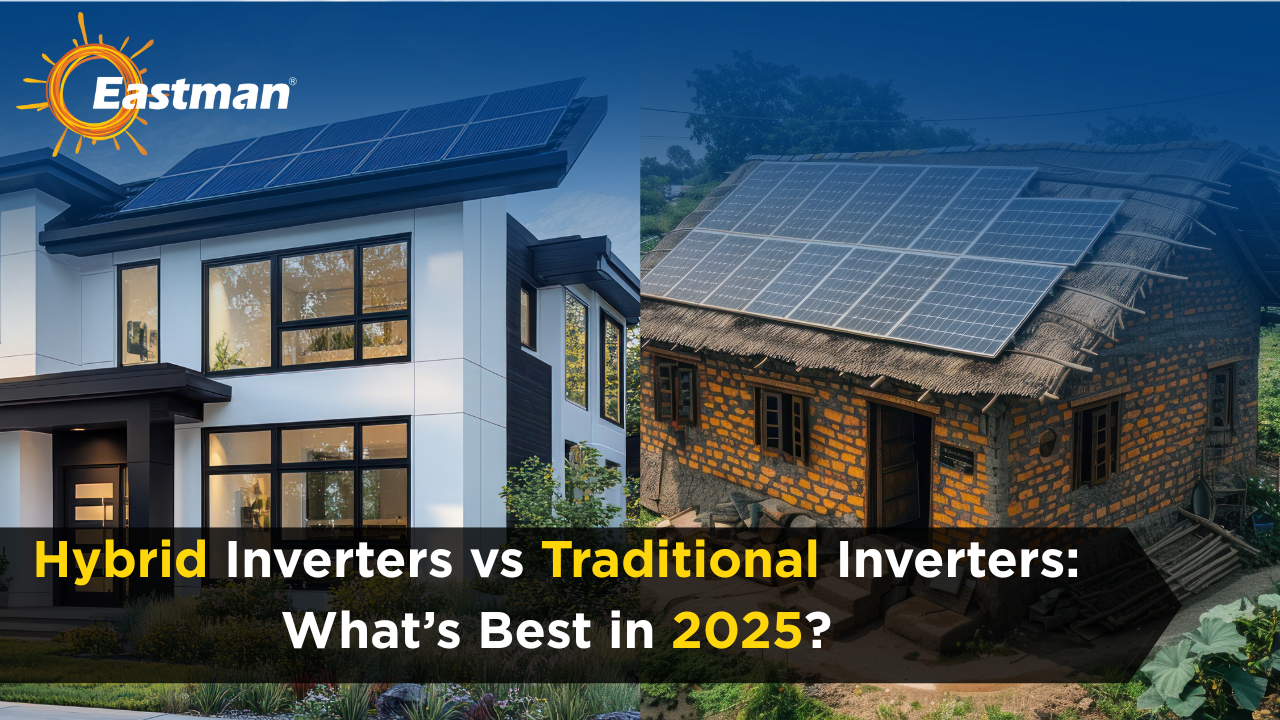

The sun is more than just a source of light; it's a beacon of energy independence. As we step into 2025, the solar landscape is evolving at an unprecedented pace, with inverter technology at its core. For anyone considering a solar installation be it for a home, business, or industrial application the choice between a traditional inverter and a modern hybrid inverter is paramount. This decision doesn't just impact your initial investment; it shapes your long-term energy resilience, savings, and sustainability.
Making the right choice can seem daunting. This Blog’s comprehensive guide will make you analyse the capabilities and disabilities of both traditional and hybrid inverters, helping you determine what’s truly best for your energy needs in 2025 and beyond. Let's delve into the path leading to smarter solar power.
Understanding Traditional Solar Inverters
Traditional inverters have long been the workhorses of the solar industry, converting the DC power generated by solar panels into AC power usable by homes and businesses. They primarily come in two distinct types, each serving a specific purpose:
On-Grid Inverters: The Grid-Tied Solution: On-grid, or grid-tied, inverters are designed to work in tandem with the utility grid. They directly feed the AC power produced by your solar panels into your home's electrical system, with any excess power being exported back to the grid. This typically qualifies you for net metering, where you earn credits for the electricity you supply.
Some Pros & Cons are:
- Simplicity: Fewer components, generally easier installation.
- Cost-Effective: Lower upfront cost compared to systems with battery storage.
- Net Metering Benefits: Can reduce or even eliminate electricity bills by selling excess power.
- No Backup Power: Crucially, on-grid inverters shut down during grid outages to protect utility workers, leaving you without power even if the sun is shining.
- Grid Dependency: You are fully reliant on the utility grid for power when your solar panels aren't generating enough.
Off-Grid Inverters: Embracing Self-Sufficiency: As highlighted by Eastman Solar, off-grid solar inverters are built for complete energy independence. These systems operate entirely disconnected from the utility grid, relying on battery banks to store excess solar energy for use during the night or cloudy days.
Some Pros & Cons are:
- Total Energy Independence: Ideal for remote locations or those seeking freedom from utility companies.
- Reliable Power: Provides continuous power supply, immune to grid outages.
- Higher Upfront Cost: Significant investment in large battery banks and more robust charging systems.
- Complex Sizing & Maintenance: Requires careful planning for battery capacity and regular maintenance.
- Limited Scalability: Expanding battery storage can be costly and requires system modification.
The Modern Shift: Hybrid Inverters
Hybrid inverters represent the evolution of solar technology, brilliantly combining the functionalities of both on-grid and off-grid systems into one sophisticated unit. These inverters allow you to connect to the utility grid while also integrating battery storage, offering unparalleled flexibility and energy resilience.
How Hybrid Inverters Work: A Smart Synergy
A hybrid solar inverter intelligently manages power flow from multiple sources: your solar panels, battery bank, and the utility grid. It can:
- Prioritize Self-Consumption: Store excess solar power in batteries for later use (e.g., at night or during peak tariff hours) before sending any remaining surplus to the grid.
- Provide Backup Power: Automatically switch to battery power during grid outages, ensuring uninterrupted electricity supply for critical loads.
- Optimize Energy Usage: Charge batteries from the grid during off-peak hours when electricity is cheaper and discharge them during peak hours to save money.
- Support Grid Interaction: Still capable of feeding excess power to the grid, allowing for net metering where applicable.
The Unmatched Advantages of Hybrid Systems for 2025
- Energy Resilience: Say goodbye to power cuts! Hybrid systems with battery backup offer peace of mind during grid failures, a crucial feature in many regions.
- Optimised Self-Consumption: Maximize the use of your own generated solar power, reducing reliance on expensive grid electricity and lowering bills significantly.
- Peak Shaving & Load Shifting: Store energy when it's abundant and cheap, then use it when demand and prices is high, leading to substantial savings.
- Futureproofing: Designed to accommodate battery storage, hybrid inverters are ideal for those who might want to add batteries later without overhauling their entire system.
- Enhanced Grid Stability: By managing power flow, hybrid systems can contribute to a more stable local grid.
- Environmental Impact: Reduced reliance on fossil fuel-generated grid electricity contributes to a smaller carbon footprint.
While the initial investment for a hybrid system with batteries can be higher than a basic on-grid setup, the long-term savings, energy independence, and peace of mind often provide a superior return on investment.
Making the Smart Choice in 2025: Key Considerations
Deciding between traditional and hybrid inverters in 2025 hinges on several critical factors unique to your situation:
- Your Energy Independence Goals: Do you simply want to reduce your electricity bill, or is ensuring continuous power during outages a top priority? If resilience is key, a hybrid inverter from Eastman is your answer.
- Grid Reliability in Your Area: In regions with frequent power cuts, the backup capabilities of a hybrid inverter become invaluable.
- Budget vs. Long-Term Value: While traditional on-grid systems have a lower upfront cost, hybrid systems often deliver greater long-term savings and value through energy independence and optimized usage.
- Future Expansion Plans: Do you foresee adding more solar panels or battery storage down the line? Hybrid inverters are built for seamless scalability.
- Regulatory Environment: Understand local net metering policies and incentives for battery storage.
- Environmental Impact: Hybrid systems, by maximizing self-consumption and reducing grid reliance, offer a greener footprint.
At Eastman, we specialize in providing advanced, reliable hybrid solar inverters and comprehensive solar energy solutions tailored to meet the diverse needs of our clients. Our expertise, honed over years, ensures that you receive not just a product, but a complete ecosystem for sustainable power.
Conclusion: Embrace Future with Hybrid
As we look towards 2025, the undeniable trend in solar energy points towards greater intelligence, resilience, and independence. While traditional inverters still hold their place in specific scenarios, hybrid inverters are emerging as the unequivocally smarter, more flexible, and future-proof choice for most consumers and businesses. They offer the perfect synergy of grid connectivity and robust battery backup, ensuring your power is stable, sustainable, and entirely in your control.
Don't let outdated technology limit your solar potential. Choose the innovation and reliability that propels you towards true energy independence. Empower your future with clean, efficient energy!
- Explore Eastman's Solar Inverters Today! Explore the full range of Hybrid Inverters
- Connect with our Experts who can tailor the perfect smart energy solution for you.
- Contact your Nearest store for easy installation.
FAQ’s
Q: What is the main difference between traditional and hybrid inverters?
A: Traditional inverters are typically either purely on-grid (no battery backup) or purely off-grid (battery-dependent and disconnected from the grid). Hybrid inverters combine both functionalities, allowing connection to the grid while also integrating battery storage for backup power and optimized self-consumption.
Q2: Are hybrid inverters more expensive than traditional ones?
A: The upfront cost of a hybrid inverter system, especially when including batteries, is generally higher than a basic on-grid traditional system. However, their long-term benefits in terms of energy savings, independence from grid outages, and optimized self-consumption often led to a superior return on investment.
Q3: Can I upgrade my existing traditional on-grid inverter system to a hybrid one?
A: In many cases, yes. Modern hybrid inverters are designed to be adaptable. However, it often requires replacing your existing inverter and adding a battery bank. It's best to consult with solar experts like Eastman to assess your current system and recommend the most cost-effective upgrade path.
Q4: Do hybrid inverters work without the grid?
A: Yes, that's one of their key advantages! During a grid outage, a hybrid inverter automatically switches to battery power, providing seamless electricity to your home or business, making you immune to power cuts.
Q5: Why should I choose Eastman for my solar inverter needs?
A: Eastman offers state-of-the-art solar solutions, including a range of robust and efficient Hybrid Solar Inverters. We bring years of expertise, cutting-edge technology, and a commitment to customer satisfaction. Choosing Eastman means investing in reliable, high-performance products backed by exceptional service, ensuring your solar journey is smooth and rewarding.
Share:


related Posts


Interested in buying our products?
Fill the enquiry form or call us on:
 78728 78728