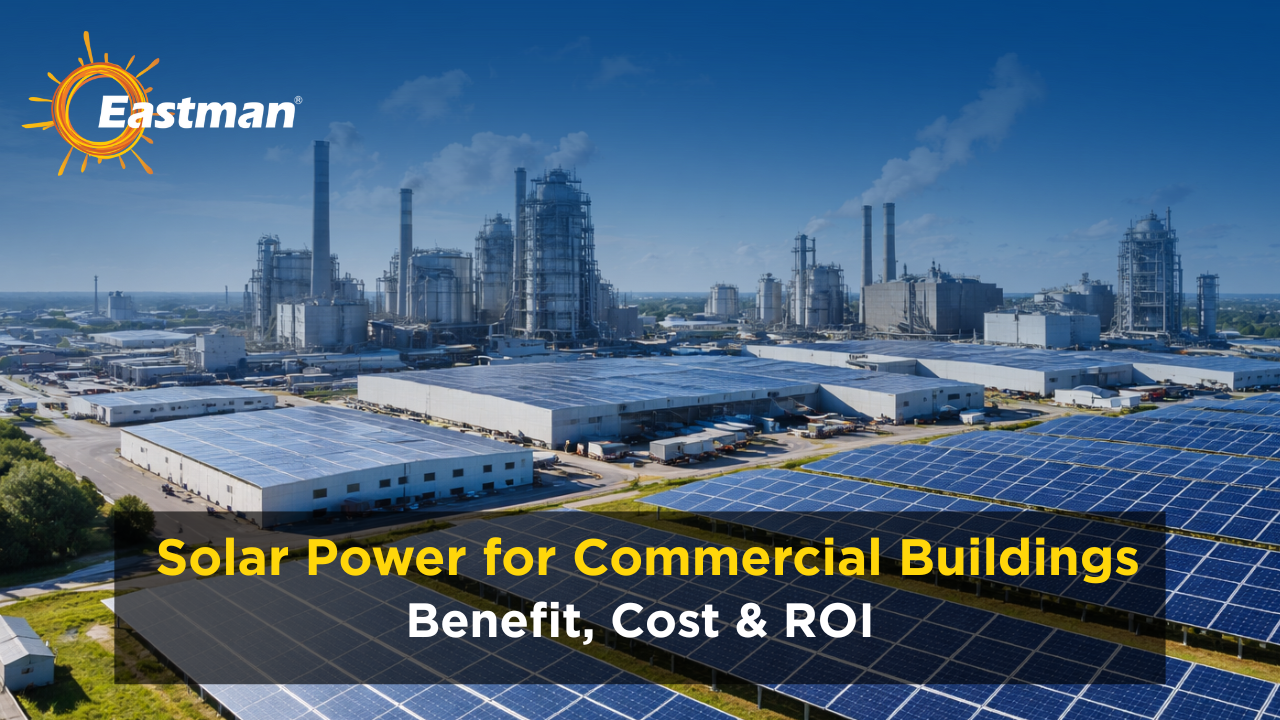
Solar Power for Commercial Buildings: Benefit, Cost & ROI
Solar Inverters
27 Dec, 2025

In today’s competitive business landscape, solar power for commercial buildings isn’t just an eco-friendly addition; it’s a strategic investment that reduces operational costs, enhances sustainability credentials, and improves long-term profitability. In an economic landscape characterized by fluctuating energy markets and rising operational costs, business owners are increasingly seeking stability. As organizations look to secure their financial future and "future-proof" their operations against grid instability, solar power has emerged not just as an environmental choice, but as a strategic financial instrument. 

Transitioning to commercial solar energy is no longer a speculative venture; it is a calculated investment that offers tangible returns. By leveraging underutilized roof space or land, businesses can transform a passive asset into a revenue-generating power plant. This shift provides more than just electricity; it offers energy independence and protection against inflation. For decision-makers planning long-term security, understanding the balance between benefit, cost, and Return on Investment (ROI) is the first step toward a more sustainable and profitable future. 

Whether you operate an office complex, hotel, manufacturing unit, hospital, or retail space, this guide will help you understand the benefits, cost implications, ROI expectations, and financial justification for adopting solar energy. And also, how trusted brands like Eastman Auto & Power Ltd. support businesses with tailored commercial solar solutions. 

The Commercial Solar Power and Its Benefits

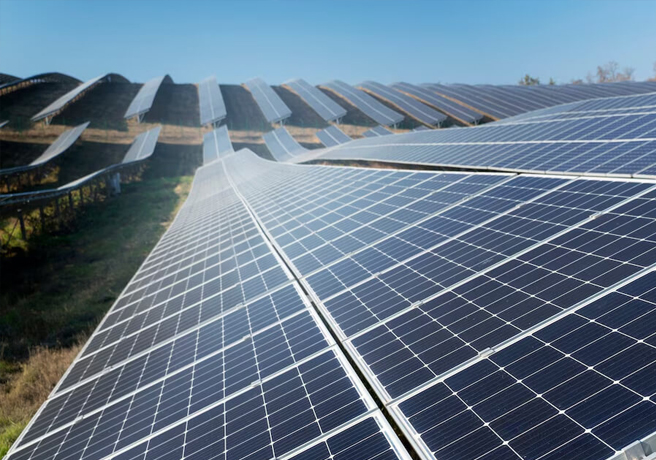
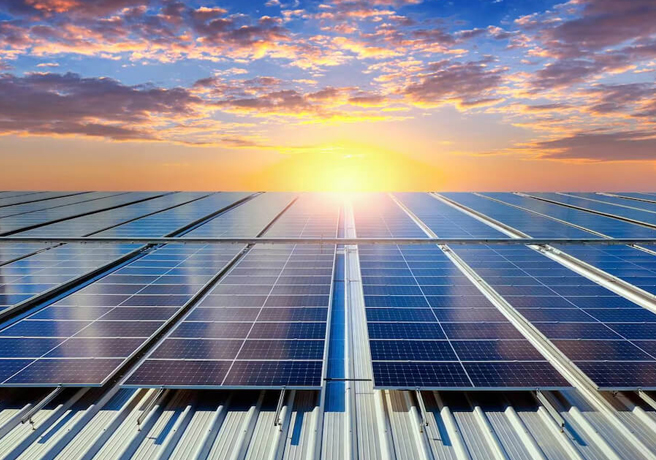
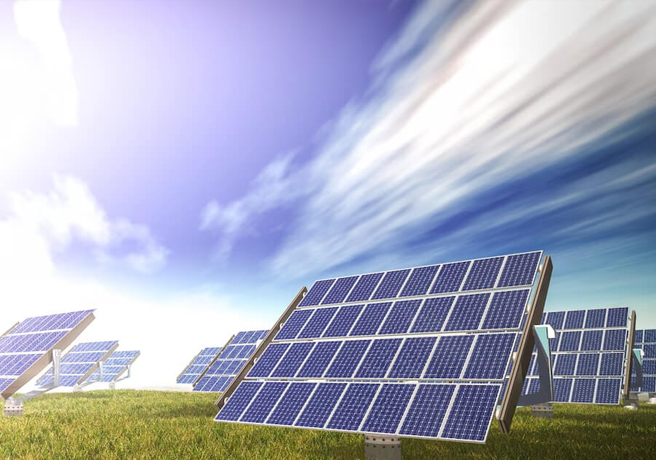
Solar power for commercial buildings involves installing solar photovoltaic systems typically on rooftops or open spaces to generate electricity that directly powers business operations. These systems can be grid-tied (on-grid) with net metering, hybrid (with battery storage), or part of advanced energy solutions, depending on business needs. 

Commercial solar differs from residential installations because, it caters to higher energy loads in accordance with residential requirements and because of this the businesses often pay higher electricity tariffs therefore, the scale and financing models vary significantly. 

Adopting solar energy provides a comprehensive suite of advantages that extend well beyond simple environmental maintenance. For middle-to-large-scale enterprises, the benefits are multifaceted, directly impacting financial statements, brand reputation, and operational resilience. Therefore, some benefits are as follows: 

1. Significant Cost Savings and Operational Efficiency 

The most immediate impact of installing a solar photovoltaic system is the reduction of utility bills. Commercial facilities often have large roof spaces and high energy consumption during daylight hours perfectly coincide with peak solar generation. By generating your own power, you effectively lock in your electricity rate at the cost of the solar equipment, insulating your business from the volatility of utility price hikes. 

Over a system lifespan typically 25 to 30 years, these savings can amount to hundreds of thousands or even lakhs. This capital, which would otherwise be paid to the utility provider, can be reinvested into core business activities, retirement planning, or facility upgrades, directly contributing to the organization's financial health. 

2. Environmental Impact and Corporate Responsibility 

Sustainability is increasingly becoming a metric for business success. Stakeholders, clients, and partners often prefer to associate with organizations that demonstrate environmental responsibility. By reducing your carbon footprint, your business contributes to cleaner air and water, aligning with corporate social responsibility goals for` your business. 

For business leaders thinking about legacy, adopting solar power is a powerful statement. It demonstrates a commitment to preserving the environment for future generations while maintaining a modern, responsible business image, while contributing to renewable and sustainable energy. 

3. Energy Independence and Security 

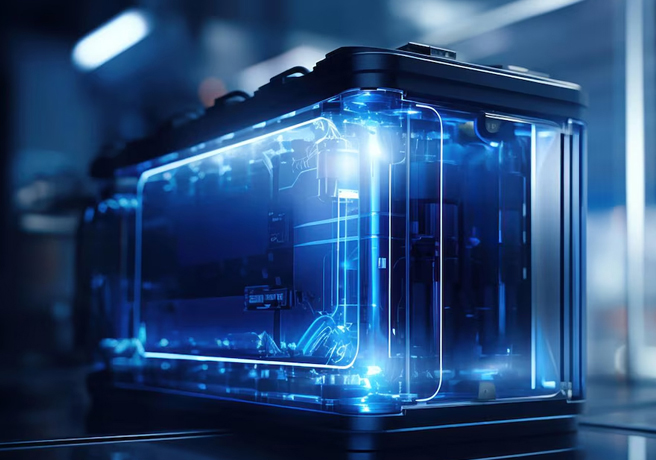
Reliance on the traditional power grid exposes businesses to outages and brownouts, which can halt operations and lead to significant financial losses. Due to grid outages, the pause in production can now be resumed when paired with robust energy storage solutions, such as high-capacity inverter batteries; solar power systems offer a layer of security that the grid cannot match. 

By integrating battery backup systems, businesses can ensure continuity during grid failures. This is particularly relevant for critical operations where downtime is not an option. Achieving a degree of energy independence provides peace of mind, knowing that your business creates its own power and has a secure backup in place. 

4. Increased Property Value 

Commercial properties equipped with solar power systems typically command higher market valuations. Prospective buyers recognize the value of reduced operating costs, making solar-equipped buildings more attractive assets. 

Appraisers are increasingly factoring renewable energy assets into property valuations. Whether you intend to sell the property in the near future or hold it as part of a long-term investment portfolio, a solar installation increases the equity and marketability of your real estate. 

Understanding the Cost of Solar Power

While long-term benefits are substantial, understanding the upfront expenditure is crucial for a comprehensive financial analysis. The cost of commercial solar varies based on system size, equipment quality, and installation complexities. 

Initial Investment Breakdown 

The "hard costs" of a solar project include the physical hardware: solar panels, inverters, racking systems, and battery storage units. High-efficiency panels and industrial-grade batteries, such as tubular gel batteries or advanced lithium-ion solutions, may have a higher initial price point but offer better performance and longevity. 

The "soft costs" include labor, permitting, inspection fees, interconnection costs, and system design. While hardware prices have dropped significantly over the last decade, soft costs remain a variable that requires careful management through experienced installers. 

Maintenance and Operational Costs 

Solar PV systems are known for their durability and low maintenance requirements. With no moving parts, the panels themselves rarely fail. However, to ensure optimal efficiency, periodic cleaning and inspections are necessary. 

The components most likely to require attention are the inverters and battery storage systems. It is advisable to budget for potential inverter replacement once during the system's 25-year lifespan. Partnering with a reputable provider like Eastman ensures access to high-quality components with robust warranties, minimizing unexpected maintenance costs. 

Financing Options 

For many businesses, paying cash upfront is the most direct route to maximizing ROI. However, various financing structures exist to make solar accessible without depleting capital reserves: 

1. Solar Loans: Allow businesses to own the system and claim tax incentives while paying for the system over time. 

2. Power Purchase Agreements: A third party owns and maintains the system, selling the power to you at a rate lower than the utility. 

3. Operating Leases: You lease the equipment for a monthly fee, benefiting from the energy produced without owning the asset. 


Cost of Solar Power for Commercial in India

Before investing in solar, every business wants to know one thing: “How much will it cost, and where does my money go?” The good news is that commercial solar systems are far more affordable today than they were a few years ago, and the savings start from the very first month. 

The total cost of installing solar power for a commercial building depends on a few practical factors, such as: 

1. The size of the solar system required (kW capacity) 

2. Quality and efficiency of solar panels 

3. Type of solar inverter 

4. Roof structure and mounting requirements 

5. Installation and safety equipment 

Simply put, larger buildings with higher electricity consumption require bigger systems, which naturally cost more, but they also deliver much higher savings and faster returns. 

Typical Cost of Commercial Rooftop Solar in India: In India, the average cost of a commercial rooftop solar system usually falls between ₹32,000 to ₹50,000 per kW. This variation depends on: System capacity (larger systems cost less per kW), brand and technology used, and on-site conditions and design complexity. 

Example: If a commercial building installs a 100-kW solar system, the approximate investment will range between ₹32 lakh to ₹50 lakh, depending on configuration and quality. Here’s how the investment is typically distributed: 

Component 

Small Commercial Building 

Medium Commercial Building 

Large Commercial Building 

Solar Panels 

₹4.8 – 7.0 lakh 

₹21 – 31 lakhs 

₹1.0 – 1.5 crore 

Inverters & Power Equipment 

₹1.2 – 2.0 lakh 

₹5 – 9 lakhs 

₹25 – 40 lakhs 

Mounting Structures & Civil Work 

₹0.8 – 1.5 lakh 

₹3.5 – 6.5 lakh 

₹16 – 30 lakhs 

Installation & Commissioning 

₹0.3 – 0.5 lakh 

₹1.5 – 2.5 lakh 

₹5 – 10 lakhs 

Ideal For 

Small offices, clinics, retail stores 

Offices, hotels, hospitals, warehouses 

Factories, IT parks, malls, large industries 

This means most of your investment goes into long-lasting assets like solar panels that work efficiently for 25+ years. While the initial investment may seem high, commercial solar systems typically: Recover their cost within 3–5 years, deliver free or low-cost electricity for 20+ years, and protect businesses from rising power tariffs. In simple terms, solar turns electricity from an expense into a long-term asset for your business. 


ROI Analysis: The Financial Case

The Return on Investment for commercial solar is typically strong, often outperforming traditional investment vehicles like stocks or bonds over a 20-year period. 

Calculating ROI: To calculate the ROI of a solar project, one must compare the total lifetime savings and income against the total net cost.  

1. Total Cost: (Gross System Cost) - (Tax Credits + Rebates + Depreciation Benefits) 

2. Total Benefit: (Annual Energy Savings x 25 Years) + (SRECs Income) + (Increased Property Value) 

3. ROI Formula: [(Total Benefit - Total Cost) / Total Cost] x 100 

For many commercial installations, the ROI can range from 10% to over 20%, depending heavily on local electricity rates and available incentives. 

The Payback Period: Payback period is the time it takes for the system's energy savings to equal the initial investment. For commercial systems, a payback period of 3 to 7 years is common. Once the system pays for itself, the electricity generated for the remainder of the system's life (often 20+ years) is essentially free, creating a stream of pure profit. 

Factors Affecting ROI- 

Not every building will see the same return. Several variables influence the efficiency and financial performance of a solar project. Such as: 

1. Location and Climate: Solar panels rely on sunlight, known as solar irradiance. Buildings in sunnier regions will generate more power per panel than those in cloudy areas. However, solar panels are actually more efficient in cooler temperatures. A clear, cool day is often better for generations than a scorching hot one. Analyzing your specific geographic location is a critical step in the design phase. 

2. Energy Consumption Patterns: Commercial entities that operate primarily during the day have a natural advantage. They consume energy exactly when the solar system is producing it, minimizing the need to export power to the grid or draw from batteries. Aligning consumption with production maximizes the value of every kilowatt-hour generated. 

3. Government Incentives and Rebates: The Indian government actively promotes solar adoption by offering financial incentives for commercial solar installations. Businesses can benefit from MNRE-supported schemes, tax advantages, and state-level policies that help reduce upfront costs. While direct capital subsidies are limited for commercial projects, companies can still take advantage of accelerated depreciation, reduced GST on solar equipment, and net metering benefits. Many states also offer additional incentives and simplified approval processes. Together, these measures significantly improve cost savings, ROI, and long-term profitability for commercial solar investments. 

4. Choose High Quality Components: When securing your business's energy future, the quality of components cannot be compromised. The efficiency of your ROI depends on the equipment's longevity. 

The Role of Batteries: For true energy independence, solar batteries are essential. They store excess energy generated during the day for use during peak demand times or outages.  

Inverter Efficiency: The inverter is the brain of the solar system, converting DC power from panels into AC power for your building. High-quality inverters ensure maximum energy conversion and system safety. Choosing reliable brands minimizes the risk of failure and protects your investment. 


Steps To Implement Solar Power

Transitioning to solar requires a systematic approach to ensure the system is tailored to your specific needs. 

1. Assessment and Energy Audit: The process begins with a comprehensive energy assessment. Analyze your historical electricity bills to understand your consumption trends. An expert site survey will evaluate the structural integrity of your roof, electrical infrastructure, and available space. 

2. Custom System Design: Based on the assessment, engineers design a system optimized for your building's orientation and energy needs. This phase involves selecting the right panels and inverters. For businesses seeking energy security, this is the stage to integrate a battery backup solution. 

3. Installation and Commissioning: Professional installation teams mount the racking, install the panels, and connect the electrical components. This phase also includes handling all necessary permits and utility interconnection agreements. Once installed, the system is commissioned and goes live. 

4. Monitoring and Maintenance: Modern solar systems come with sophisticated monitoring software. This allows you to track energy production in real-time via web or mobile apps. Regular monitoring ensures the system is performing at peak efficiency and alerts you to any potential issues immediately. 

Conclusion

Solar power for commercial buildings is a proven, high-impact investment that delivers cost savings, increases energy independence, and strengthens sustainability goals. With rising electricity costs, predictable solar generation, and attractive incentives, solar adds both financial and strategic value to businesses of all sizes. Partnering with a trusted brand like Eastman ensures a seamless transition to renewable energy with maximum return on investment.  

Investment in solar power for commercial buildings is a prudent decision that aligns financial growth with operational security. It offers a unique opportunity to reduce fixed costs, capitalize on tax incentives, and increase asset value, all while contributing to a sustainable future. 

For business owners approaching retirement or seeking to solidify their legacy, solar power provides peace of mind. It transforms a variable liability, energy costs, into a fixed, manageable asset. By choosing the right partners and high-quality components, you ensure that this investment continues to yield returns for decades. 

CTA

Ready to unlock long-term cost savings, take control of your energy needs and power your business with clean energy and secure its financial future Contact EAPL today for a free commercial solar assessment and customized solution tailored to your building’s unique needs. Make your business more profitable, sustainable, and future-ready with reliable solar power solutions. 

Explore Eastman Solar Solutions here.   

Contact Eastman for more information. 

Get to know your nearest  Store Locator for convenience.  

FAQ’s

Q. Will solar panels work during a power outage? 

A. Standard grid-tied solar systems will shut down during an outage for safety reasons. However, if your system is equipped with a battery backup solution, you can continue to power critical loads independently of the grid. 

Q. How long do commercial solar panels last? 

A. Most commercial solar panels are warrantied for 25 years but can continue to produce electricity for 30 to 40 years. Inverters and batteries typically have shorter lifespans and may need replacement sooner. 

Q. Are there any financial incentives for commercial solar in India? And do grid is needed even after solar power? 

 
A. Yes, businesses can benefit from government subsidies, tax benefits, accelerated depreciation, and net metering credits, improving the investment case. And yes, most commercial systems are grid-tied. Solar power reduces grid consumption, and excess energy can be exported through net metering where available. 

Q. Can I lease a solar system instead of buying it? 

A. Yes, leasing and Power Purchase Agreements (PPAs) are common options that allow you to install solar with little to no upfront cost, though the long-term ROI is generally higher with direct ownership. 

Q. What maintenance does a commercial solar system require? 

A. Solar systems require very little maintenance. Periodic cleaning to remove dust or debris and an annual electrical inspection are usually sufficient to keep the system running efficiently.

related Posts

Interested in buying our products?

Fill the enquiry form or call us on:

78728 78728