
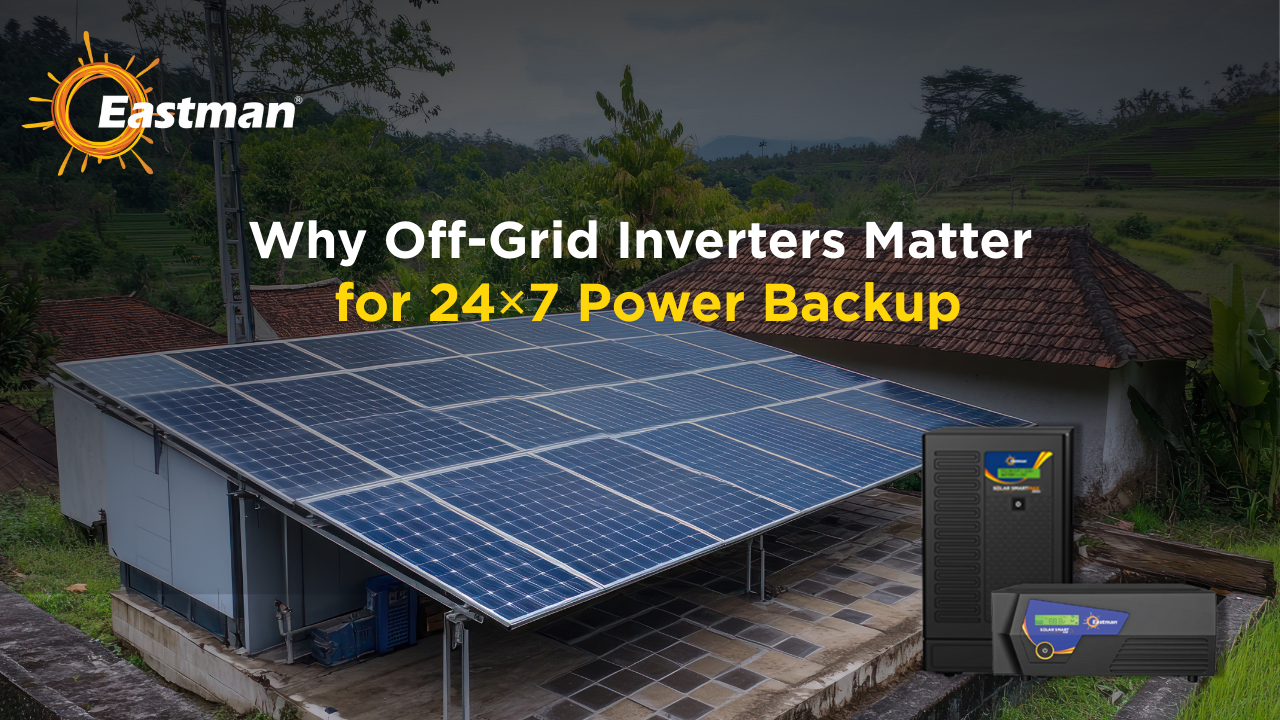

In today’s world, uninterrupted electricity is no longer a luxury; it is a necessity. From homes and farms to businesses and critical infrastructure, reliable power supports productivity, safety, and daily comfort. However, in many regions, grid electricity remains inconsistent, unreliable, or completely unavailable.
This is where off-grid inverters play a vital role. Designed to operate independently of utility grids, off-grid inverters deliver continuous, stable power using solar energy, batteries, or generator support. For users seeking true energy independence and 24×7 power availability, an off-grid inverter is the foundation of a resilient power system.
What is an Off-Grid Inverter?
An off-grid inverter is a power conversion device that works without any connection to the utility grid. It converts direct current (DC) electricity generated by solar panels or stored in batteries into alternating current (AC) power used by household and commercial appliances.
Unlike grid-tied systems, off-grid inverters:
- Operate independently of utility infrastructure
- Manage battery charging and discharging
- Supply uninterrupted power even during extended outages
- Support multiple energy sources such as solar and generators
This makes it essential for locations where grid access is unreliable or unavailable.
Why Off-Grid inverters are essential for 24×7 Power Backup
1. Uninterrupted Power Supply: Off-grid inverters ensure continuous electricity regardless of grid failures. Power outages, load shedding, or grid instability have no impact on system performance when energy is sourced from batteries and solar generation. This reliability is especially important for:
- Homes in rural or remote areas
- Agricultural operations
- Small businesses
- Healthcare facilities
- Telecom and security systems
2. Complete Energy Independence: By eliminating reliance on utility providers, off-grid systems give users full control over their power generation and consumption. This independence protects against rising electricity tariffs, unpredictable outages, and infrastructure limitations. Users can generate, store, and use electricity on their own terms.
3. Reliable Performance in Remote and Challenging Locations: Off-grid inverters are engineered to operate in diverse environments, including areas with:
- High temperatures
- Voltage fluctuations
- Limited infrastructure
- Harsh weather conditions
Their robust design ensures consistent performance even in demanding conditions where grid power cannot be reached.
4. Intelligent Battery Management: One of the most important functions of an off-grid inverter is battery management. Advanced systems:
- Control charging and discharging cycles
- Prevent overcharging and deep discharge
- Extend battery lifespan
- Improve overall system efficiency
This intelligent management ensures that stored energy is used efficiently and safely, supporting long-term reliability.
5. Stable Power for Sensitive Equipment: Off-grid inverters deliver clean, stable AC power that protects sensitive electronics and appliances. This is critical for:
- Computers and communication equipment
- Medical devices
- Industrial tools
- Motor-driven appliances
Consistent voltage and frequency reduce the risk of damage and improve equipment longevity.
6. Flexibility to Integrate Multiple Energy Sources: Off-grid inverter systems can be designed to work with:
- Solar panels
- Battery storage systems
- Backup generators
This flexibility allows users to optimize energy usage, reduce fuel dependency, and ensure power availability even during prolonged low-sunlight periods.
Off-Grid Inverters are Ideal for:
- Remote homes and villages
- Farms and irrigation systems
- Construction and mining sites
- Island communities
- Mobile homes and RVs
- Small commercial operations
- Disaster-prone regions
In these settings, off-grid systems provide reliable power where grid expansion is impractical or cost-prohibitive.
Best practices for reliable off-grid power
To achieve true 24×7 backup, proper system design is essential:
1. Correct System Sizing: Ensure the inverter and battery capacity match both regular and peak load requirements.
2. Quality Battery Selection: Choose batteries designed for deep cycling and long service life.
3. Load Management: Avoid overloading the system and prioritize essential appliances.
4. Regular Monitoring: Track performance, battery status, and energy generation to prevent failures.
5. Proper Installation & Ventilation: Maintain adequate airflow and clean electrical connections for safe operation.
Conclusion
Off-grid inverters are the backbone of reliable, independent power systems. They enable 24×7 electricity supply by intelligently managing energy generation, storage, and delivery; without relying on the utility grid.
For users seeking uninterrupted power, energy independence, and long-term resilience, off-grid inverters provide a proven and future-ready solution. Whether powering a remote home, a farm, or a business, off-grid technology ensures electricity is always available—when and where it matters most.
Choose reliability. Choose performance. Choose Eastman.
Trusted globally for quality solar and battery technologies,
- Contact Eastman for more information.
- Explore Eastman Off-Grid Solutions.
- Explore Eastman On-Grid Solutions.
- Get to know your nearest Store Locator for convenience.
FAQ’s
Q. Can an off-grid inverter provide power 24×7?
A. Yes. With proper battery storage and energy generation, off-grid inverters can deliver continuous power.
Q. Do off-grid systems require solar panels?
A. Solar panels are commonly used, but systems can also include generators or other energy sources.
Q. Are off-grid inverters suitable for businesses?
A. Yes. They are widely used in agriculture, telecom, retail, and small industrial applications.
Q. How long do off-grid batteries last?
A. Battery lifespan depends on type, usage, and maintenance, ranging from several years to over a decade.
Q. Is an off-grid system expensive?
A. While initial investment may be higher, long-term savings from energy independence often outweigh costs.
Share:


related Posts




Interested in buying our products?
Fill the enquiry form or call us on:
 78728 78728